

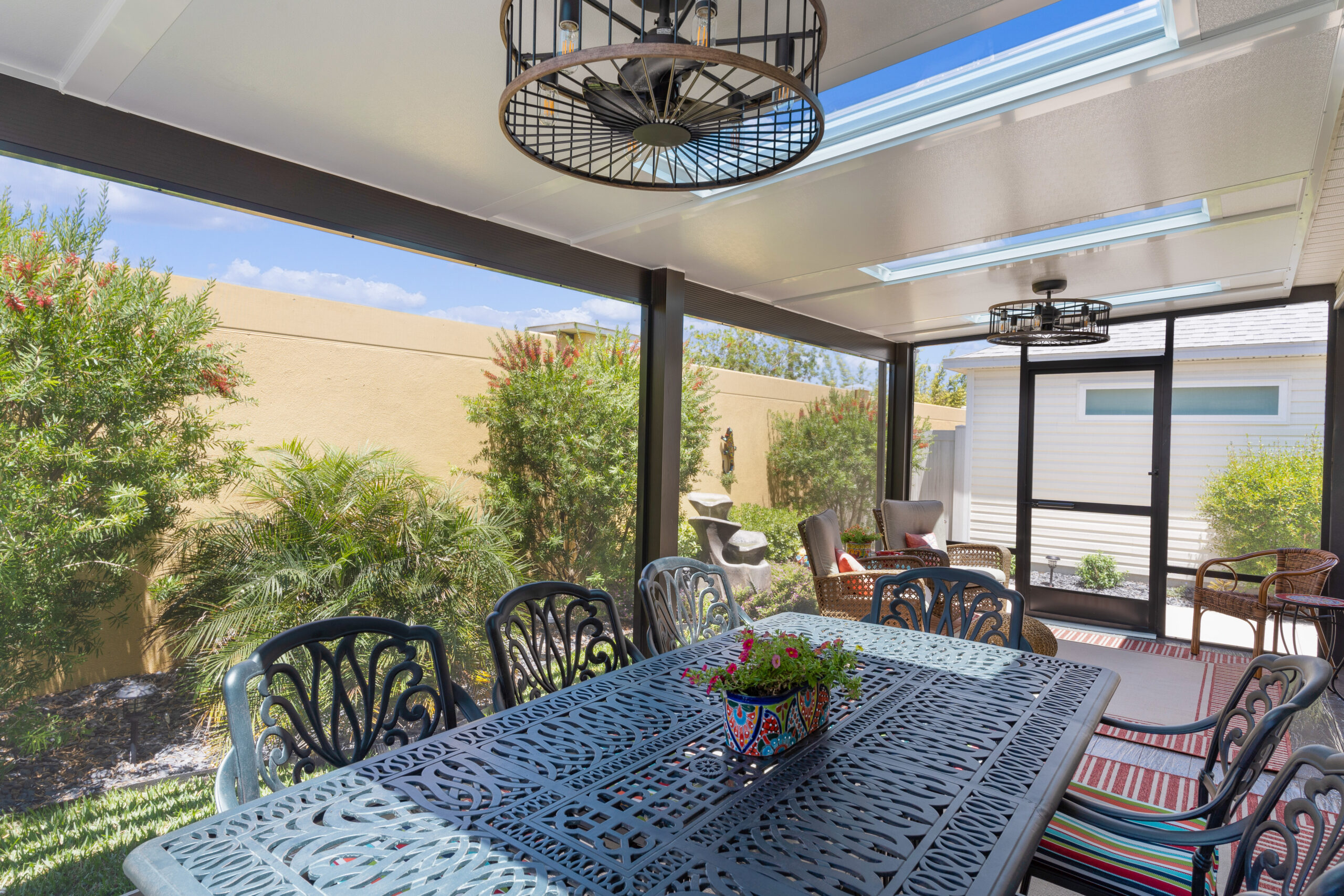
A patio cover can make your outdoor space more comfortable, attractive, and useful, but it is also exposed to sun, rain, wind, dirt, moisture, and seasonal temperature changes. Over time, these elements can wear down materials, fade finishes, loosen hardware, and create small problems that turn into bigger repairs. With regular care and smart maintenance, you can protect your patio cover and help it last for many years.
Clean Your Patio Cover Regularly
Routine cleaning is one of the easiest ways to protect your patio cover from long-term damage. Dirt, pollen, leaves, bird droppings, mildew, and outdoor debris can build up on the surface and slowly affect the finish. Use a soft brush, mild soap, and water to clean the structure, and avoid harsh chemicals or abrasive tools that could scratch, strip, or weaken the material.
Inspect for Damage After Storms
Heavy rain, strong wind, hail, and falling branches can damage a patio cover even if the problem is not obvious right away. After major weather events, check the roof panels, posts, beams, fasteners, gutters, flashing, and connection points for cracks, dents, loose parts, or signs of shifting. Catching storm damage early can help you schedule repairs before leaks, rust, or structural issues get worse.
Keep Gutters and Drainage Clear
If your patio cover has gutters or drainage channels, they need to stay clear so water can move away from the structure. Leaves, twigs, dirt, and roof debris can block water flow, causing overflow, pooling, staining, or moisture damage. Cleaning gutters regularly helps protect the patio cover, nearby walls, foundation areas, and outdoor flooring from water-related problems.
Protect Against Moisture and Mold
Moisture is one of the biggest threats to patio covers, especially in shaded areas or humid climates. Watch for mildew, mold, green buildup, soft spots, bubbling paint, or musty smells around wood, trim, and connection points. Good airflow, proper drainage, regular cleaning, and quick repairs can help prevent moisture from settling into materials and shortening the life of your patio cover.
Seal and Refinish Wood Patio Covers
Wood patio covers need extra protection because they can absorb moisture, fade in the sun, and become vulnerable to insects or rot. Depending on the wood type and local climate, you may need to stain, seal, or repaint the structure every few years. Keeping the finish in good condition helps block water, reduce cracking, and preserve the natural look of the wood.
Watch for Rust on Metal Parts
Metal patio covers and hardware can last a long time, but rust can still develop if protective coatings wear down or water collects around fasteners. Check screws, brackets, bolts, posts, joints, and metal panels for rust spots, discoloration, or corrosion. Small rust areas should be cleaned and treated early so they do not spread or weaken important parts of the structure.
Trim Nearby Trees and Branches
Trees can provide extra shade, but branches that hang over your patio cover can cause problems. Falling limbs, leaves, sap, seeds, and constant shade can lead to scratches, clogged gutters, stains, mildew, and roof damage. Keeping branches trimmed back reduces debris buildup and lowers the risk of storm-related damage.
Check Fasteners and Connections
A patio cover depends on secure fasteners, brackets, anchors, and connection points to stay stable. Over time, wind, vibration, temperature changes, and regular use can loosen hardware. Inspect these areas occasionally and tighten or replace parts as needed to help the structure remain safe and properly supported.
Use the Right Cleaning Products
Different patio cover materials require different care. Aluminum, vinyl, wood, steel, and insulated panel covers may respond differently to cleaners, brushes, and pressure washing. Before using a product, check that it is safe for your patio cover material, and avoid high-pressure washing if it could force water into seams, damage paint, or loosen seals.
Protect Against Sun Damage
Constant sun exposure can fade colors, dry out wood, weaken finishes, and make some materials brittle over time. UV-resistant coatings, quality paint, proper sealants, and shade-friendly design choices can help reduce sun damage. If your patio cover includes fabric, screens, or decorative elements, choose outdoor-rated materials that are made to handle direct sunlight.
Maintain Caulking and Seals
Caulking and seals help prevent water from entering joints, seams, and areas where the patio cover attaches to your home. Over time, these materials can crack, shrink, or pull away because of heat, cold, and moisture. Inspect seals regularly and replace damaged caulking to help prevent leaks and water intrusion.
Schedule Professional Maintenance When Needed
Some patio cover issues are better handled by a professional, especially if you notice sagging, leaks, structural movement, electrical problems, roof damage, or major rust. A trained contractor can identify hidden issues and recommend repairs before the damage spreads. Professional maintenance can also help protect your investment if your patio cover includes lighting, fans, gutters, or custom structural features.
Keep Your Patio Cover Strong for Years
Protecting your patio cover from the elements does not have to be complicated, but it does need to be consistent. Regular cleaning, clear drainage, trimmed trees, sealed wood, rust prevention, secure fasteners, and timely repairs all help extend the life of the structure. With the right care, your patio cover can continue to provide shade, comfort, and style while keeping your outdoor space more enjoyable year after year.